
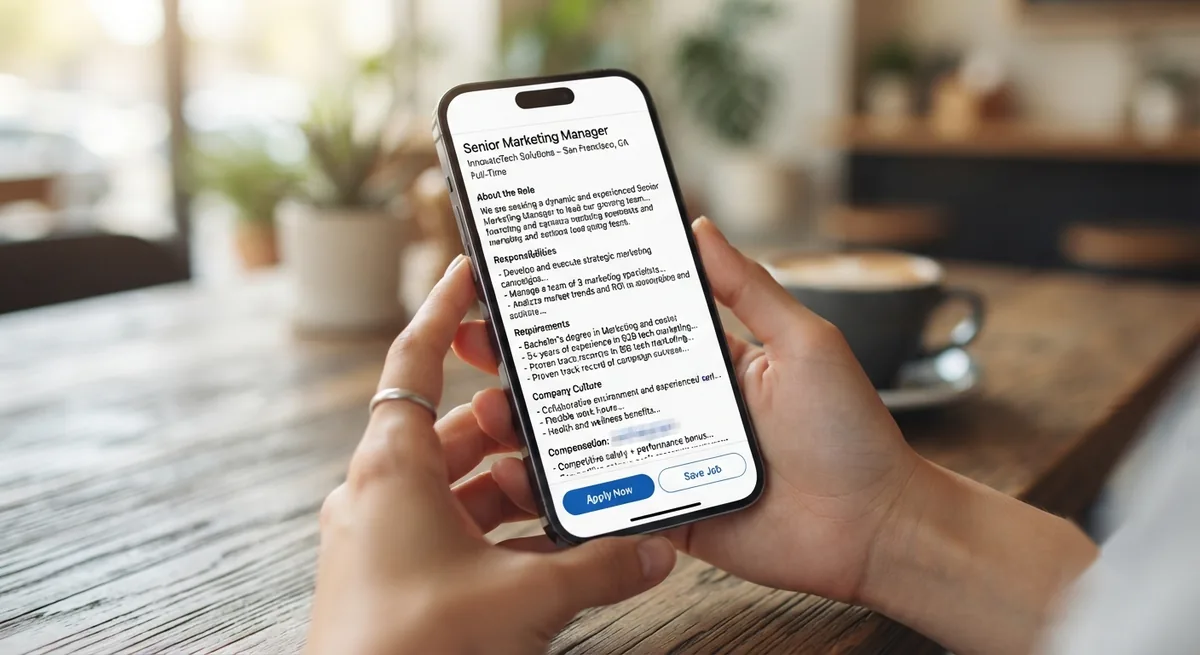
You read forty job ads. Four of them mention money. The rest say “competitive salary”, which is a phrase that has never once been used to describe a generous one. Here is why Australian employers do it, what has actually changed in the law, and how to get the number before the third interview.
Why do Australian job ads not show salary?
Because withholding it favours the employer. An undisclosed range lets them anchor to whatever you say first, avoid showing existing staff what new hires are worth, and keep flexibility to pay two people differently for the same job. Australia has no general legal requirement to advertise pay, so the practice persists.
The four real reasons
- Anchoring. Whoever names a number first sets the frame. If they ask your expectations before revealing a range, they have gained information for free.
- Internal equity. Publishing $130,000 for a role tells every current employee at $110,000 doing that job exactly what has happened. That conversation is expensive.
- Genuine range. Some ads really do cover a wide band because the level depends on who applies. That is a fair reason, and it is also the excuse used when the reason is one of the others.
- Because they can. Norms hold until they are challenged. In markets where disclosure became standard, it happened through law or applicant pressure, not employer conscience.
What the law actually says
The most important change is not about ads at all — it is about you. Since the Secure Jobs, Better Pay reforms took effect in December 2022, pay secrecy clauses have no legal effect in Australia. Employees have a positive workplace right to disclose their own pay and conditions, and to ask a colleague about theirs. Employers cannot include new secrecy terms in contracts, and civil penalties apply to those who try.
That is a bigger shift than most people realise. If your contract has a clause telling you not to discuss your salary, it is unenforceable, and being disciplined for talking about your pay is a workplace-rights issue rather than a performance one. Check the current position with the Fair Work Ombudsman before acting on it.
The second shift is disclosure at the employer level: the Workplace Gender Equality Agency has published individual employer gender pay gaps for private employers with 100 or more employees since February 2024. That has made pay structures visible in a way annual reports never did, and it has quietly pushed larger employers toward defined bands.
How to get the range without losing the room
Ask early, ask neutrally, and make it about fit rather than money. Three lines that work in an Australian context:
- At recruiter screening: “Before we go further, could you share the band for this role? I want to be sure we are in the same range before either of us invests time.”
- If they ask your expectations first: “Happy to share, but I would rather not anchor us — what has been budgeted for the position?”
- If they insist: give a researched range, not a number, and say where it came from. “Based on market data for this role in Melbourne, I am looking at $120,000 to $135,000 base.”
That last one only works if the range is real. Which is the actual answer to opaque ads: if they will not publish the market rate, find it yourself before the conversation.
The counter to an opaque market
You cannot make employers publish ranges. You can make it irrelevant. Run a free salary check for the role and city before you apply, and you walk into the screening call already knowing the band — which is exactly the information the ad withheld. The full ladder is in the Australian salary percentile table.
Then handle the money conversation deliberately: how to counter a job offer once there is something to counter, with wording from the salary negotiation email templates.
A job ad without a salary is not a mystery. It is a negotiating position — and it only works on people who have not done the research.
Legal position summarised from the Fair Work Ombudsman and the Secure Jobs, Better Pay amendments; employer gender pay gap publication from the Workplace Gender Equality Agency. General information only, not legal advice.