
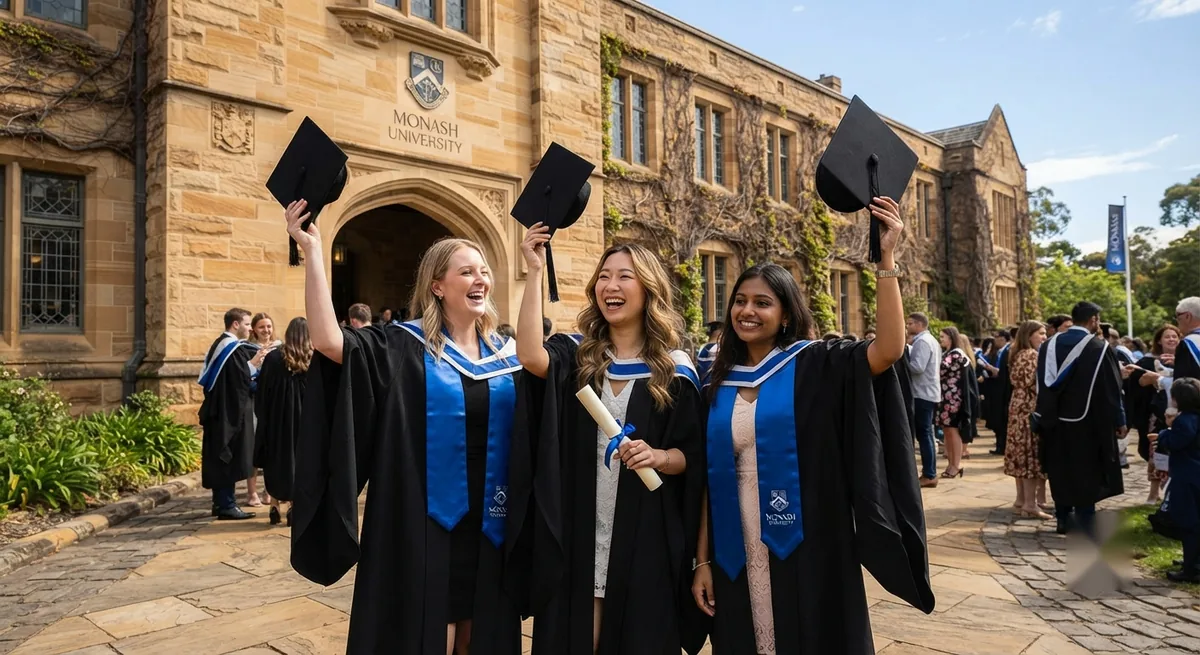
There are two graduate salary numbers in Australia and they are about $36,000 apart. One is what people with degrees earn. The other is what people who just finished a degree earn. Confusing them is how graduates end up disappointed, and how some end up accepting far too little.
What is the average graduate salary in Australia?
Australians aged 20–24 in full-time work have a median of about $62,400 a year (ABS, August 2025) — that is the realistic new-graduate range. The often-quoted “$98,800 for bachelor degree holders” is the median across everyone with a degree, at every career stage, and is not a starting salary.
What a qualification is actually worth
| Highest qualification | Weekly | Annual |
|---|---|---|
| Postgraduate degree | $2,250 | $117,000 |
| Graduate diploma or certificate | $2,176 | $113,200 |
| Bachelor degree | $1,900 | $98,800 |
| Advanced diploma or diploma | $1,700 | $88,400 |
| Certificate III or IV | $1,665 | $86,600 |
| No post-school qualification | $1,400 | $72,800 |
| All full-time employees | $1,741 | $90,500 |
The degree premium is $26,000 a year — the gap between a bachelor degree and no post-school qualification. A postgraduate degree adds roughly another $18,200 on top of the bachelor median. Those are real, sizeable numbers, and they are also *lifetime-average* numbers.
Why your first salary is nowhere near the degree median
Pay tracks experience far more tightly than it tracks paper. The same ABS release, cut by age instead of qualification:
| Age | Weekly | Annual |
|---|---|---|
| 20–24 | $1,200 | $62,400 |
| 25–34 | $1,648 | $85,700 |
| 35–44 | $1,950 | $101,400 |
| 45–54 | $2,000 | $104,000 |
A graduate does not step onto the bachelor-degree median. They step onto the bottom of the 20–24 band and climb toward it over roughly a decade. Read the two tables together and the honest expectation for a first professional role in 2026 is somewhere in the high $50,000s to high $70,000s, with the stronger fields and the big graduate programs sitting above that.
What moves a graduate offer
- Field, not grades. Engineering, ICT, health and finance graduate programs anchor well above a general commerce or arts entry role. Mining and professional services pay more again.
- Structured program vs direct hire. Formal graduate programs usually publish a band and rarely negotiate. A direct hire into a small team almost always has room.
- City. The full-time median runs from $83,200 in Tasmania to $98,800 in Western Australia. A $65,000 graduate offer means different things in Hobart and Perth.
- Whether you asked. The single largest variable, and the only one you control on the day.
The first-offer trap
Graduates are told to be grateful, and it costs them for a decade. Every raise afterwards is a percentage of that first base, and your next employer will anchor to it. Accepting $60,000 when the role paid $70,000 is not a $10,000 mistake — compounded across five years of percentage raises, it is usually north of $60,000.
Negotiating a graduate offer is not arrogant. It is one polite email with a number and a reason in it. The wording is in the salary negotiation email templates, and the mechanics of a counter are in how to counter a job offer in Australia.
Check the offer before you sign it
Before you accept anything, run a free salary check with the role title, city and your experience level. It takes about a minute, needs no signup, and returns your percentile against Australian market data — which is a far better answer than “is this normal?” asked in a group chat. The wider ladder is in the Australian salary percentile table.
The degree premium is $26,000 a year. It just does not turn up on graduation day — you spend the first decade walking toward it.
Figures from ABS Employee Earnings (August 2025).